The Bannockburn Rewilding Sanctuary is a 70 ha feral predator free area where the Sydney Rewilding Initiative has been working to reintroduce missing species. To date, parma wallabies and eastern quolls have been released into the area and are thriving. We are researching these reintroductions to help understand the ins and outs of how to release species back into their native ranges and hopefully into unfenced areas in the future.
This year with help from the Invasive Species Council’s Rewilding Australia Program, we secured funding from the Tony Lisette Lewis Foundation for the expansion of the Bannockburn Rewilding Sanctuary. Construction has started on a new predator proof fence on the adjacent Callala Bay Water Treatment Plant, and once completed will form the Shoalhaven Feral Free Area totalling 213 ha. This will transform the feral free area into a sizeable reserve and allow for the reintroduction of further missing species including red-necked pademelons, eastern bettongs and southern brown bandicoots.
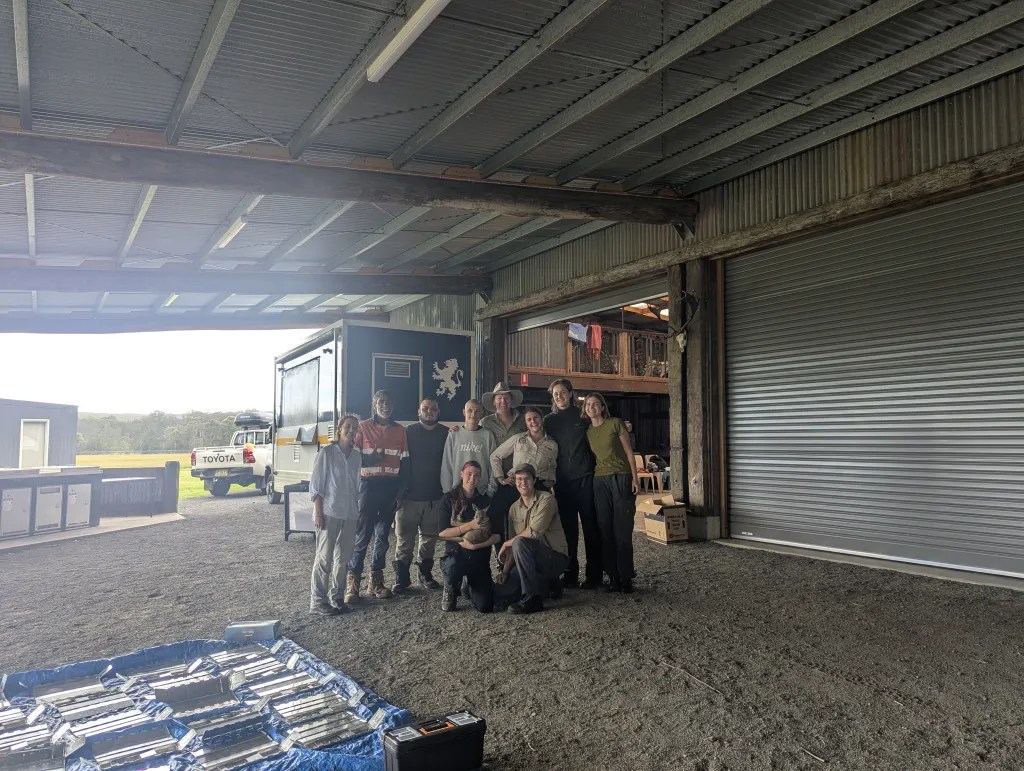
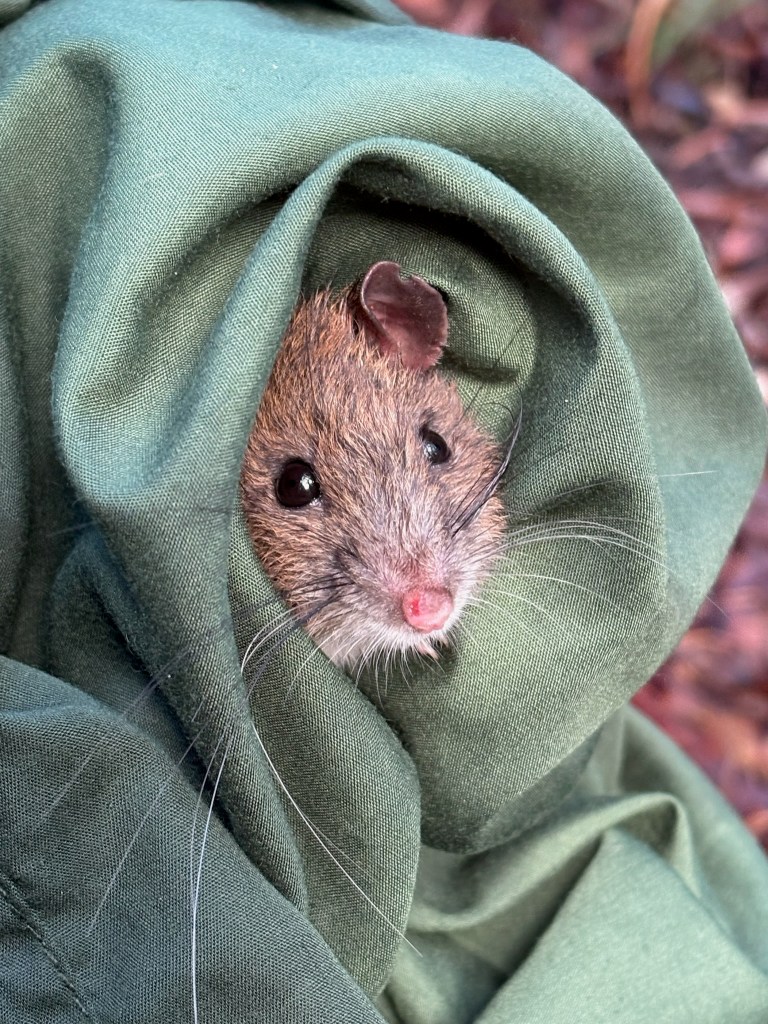
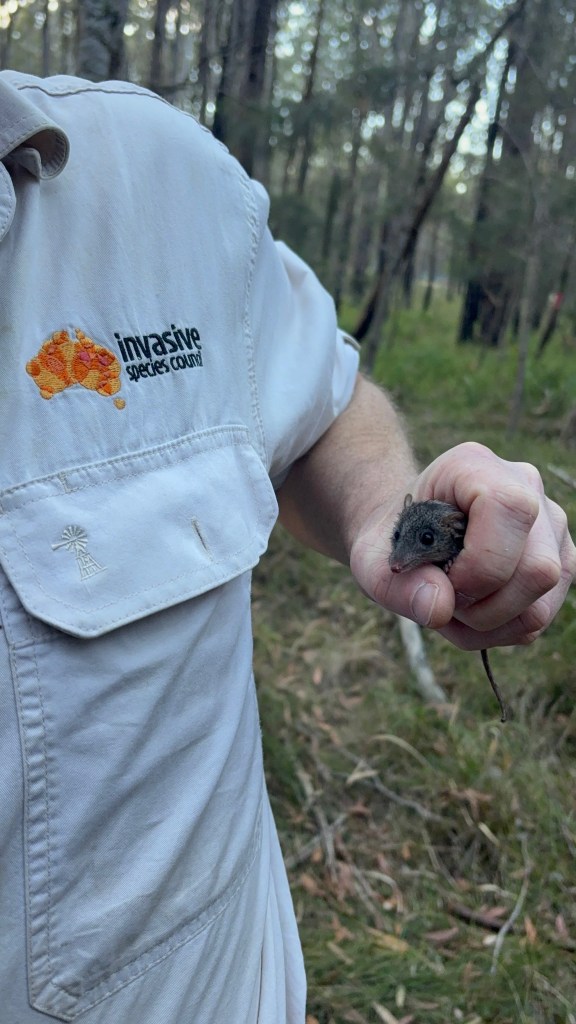
Last week, with partners from the Invasive Species Council, and members of the Jerrinja community we ran a small mammal trapping session at the soon to be completed Shoalhaven Feral Free Area. The week was a success with a good number of bush rats, swamp rats and antechinus caught, allowing us to estimate the population of these animals in the area. It was wonderful to be able to work on country with the Jerrinja community and exchange ecological knowledge with them.
The trapping is part of a wider ecosystem health monitoring program we have been running at the Shoalhaven Feral Free Area aimed at seeking to understand the benefits of removing feral predators, and reintroducing lost native species to an area. We are monitoring the small mammals, as well as the bird and bat life using songmeters, the invertebrate diversity and the vegetation structure and hope to see large changes over the next few years with the removal of foxes and cats and the reintroduction of many missing critters!


Leave a Reply