In early 2026 we will be reintroducing the bogul (Dharug), also known as the native bush rat (Rattus fuscipes), to the Twin Creeks and Allenby Park reserves, and reinforcing an existing population at North Head reserve. This project is working towards keeping a common species common and restoring ecosystem function to human-disrupted urban reserves.
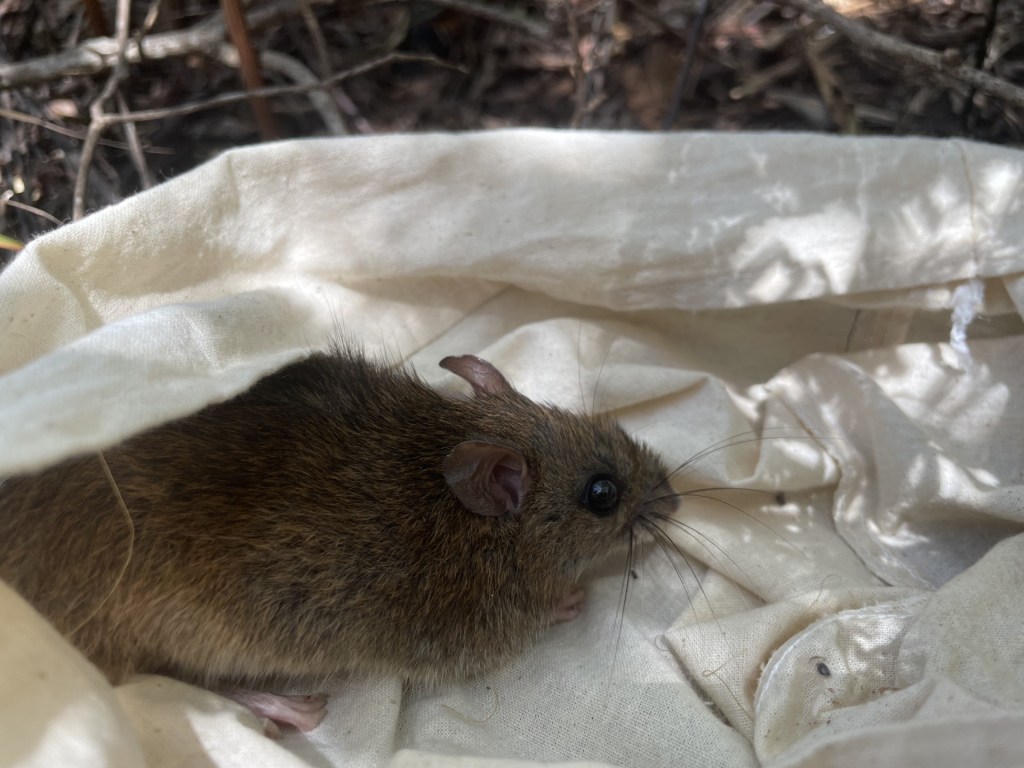
Boguls are an important pioneer species for rewilding – they are the unsung heros of urban native vegetation patches. Whilst being small and shy, boguls kickstart the important process of restoring ecological balance to urban reserves. How do they do this?
- Boguls are nature’s pest manager – they pack a powerful punch by supressing pest rodents. By outcompeting the invasive black rat (Rattus rattus), boguls allow for the prey of black rats – small inverebrates, reptiles and young birds – to flourish. This is an important step towards ecological restoration, as well as readying the home for future reintroductions.
- Having a largely plant and fungi based diet, boguls play an important role in promoting vegetation health. By dispersing fungi, pollen and seeds, boguls help to maintain genetic connectivity and create resilient ecosystems. Fun fact: Boguls were one of the first rodents to ever be doccumented as a pollinator.
We will be updating this page as we get closer to the translocation date in Feburary – for any questions or enquiries, please contact mwauchope@sydney.edu.au or thomas.newsome@sydney.edu.au.
 Sydney Rewilding Initiative